


Dental Crown Dubai: Types, Timeline, and Crown Cost Dubai Explained
Estimated reading time: 10 minutes
Key Takeaways
- Choosing a dental crown in Dubai can feel confusing because clinics may offer different materials, different timelines, and very different prices.
- To decide well, set your criteria upfront. Think about the tooth location (front or back), how hard you bite, and how important looks are.
- Most crowns in Dubai are done in two visits, but some clinics also offer same-day crowns using CAD-CAM machines.
- Clinics in Dubai may offer several crown materials. The right one depends on where the tooth sits, how strong you need it to be, and how natural you want it to look.
- Crown cost in Dubai is not one fixed number. Prices change based on the material, the clinic, and how complex your tooth is.
Table of Contents
- What a crown is and who typically needs one (Dubai context)
- The typical crown treatment journey in Dubai (what happens, how long it takes)
- Crown materials available in Dubai, quick comparison table
- Porcelain crowns in Dubai, when they’re the best choice
- Zirconia crowns in Dubai, strength, aesthetics, and monolithic vs layered
- Other crown options you’ll see in Dubai (PFM, gold/metal, E‑Max, composite)
- Scenario-based recommendations (match your situation to the right crown)
- Crown cost in Dubai, typical price ranges and what’s included
- What drives the final price (and how to compare quotes fairly)
- Quality and safety checks in Dubai clinics (how to choose a provider confidently)
- Common questions that affect buying decisions (pain, sensitivity, eating, repairs, lifespan)
- Alternatives to crowns (to confirm a crown is the right investment)
- Summary decision framework (tie type + price + timeline together without CTAs)
Choosing a dental crown in Dubai can feel confusing because clinics may offer different materials, different timelines, and very different prices. This guide is built to help you make a purchase-ready decision fast. You will learn the main crown types, what happens at each visit, what affects quality, and why crown cost in Dubai can change from one quote to another.
To decide well, set your criteria upfront. Think about the tooth location (front or back), how hard you bite, and how important looks are. Your “best” crown is the one that matches your needs, not just the most expensive option.
This article is written by Dr. Maroof Beg, a specialist restorative dentist with experience in cosmetic and general dentistry in Dubai.
What a crown is and who typically needs one (Dubai context)
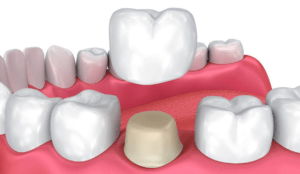
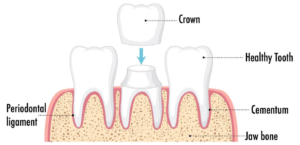
A crown is a tooth-shaped cap that covers a damaged tooth and helps bring back its shape, size, strength, and appearance. This is a common treatment in Dubai for both function and looks. A crown can protect a weak tooth and help you chew comfortably again. It can also improve a tooth that looks very dark or uneven.
According to guidance on what crowns are used for, crowns are often recommended when a tooth needs strong, full coverage support.
Common reasons a dentist may suggest a tooth crown Dubai treatment include:
- A cracked or fractured tooth
- A tooth weakened by a large filling
- After a root canal, when the tooth is more brittle
- Severe discoloration or a misshapen tooth
- To support an implant crown or a bridge
You usually need enough healthy tooth left to hold the crown. If the tooth is missing completely, a dental crown alone will not fit, you may need an implant first.
The typical crown treatment journey in Dubai (what happens, how long it takes)
Knowing the steps helps you judge speed versus quality. Most crowns in Dubai are done in two visits, but some clinics also offer same-day crowns using CAD-CAM machines.
A typical journey, based on common crown treatment steps, looks like this:
- Consultation and exam: the dentist checks the tooth, gums, and bite.
- Imaging or digital scan: scans or impressions record the tooth and nearby teeth.
- Tooth preparation: the tooth is shaped so the crown can fit.
- Temporary crown: protects the tooth while the final crown is made.
- Fabrication: a lab makes the crown, often in about 7 to 14 days.
- Final fitting: the crown is cemented and the bite is adjusted.
- Follow-up: small bite changes can be done if needed.
Most people feel pressure and vibration, not sharp pain, because local numbing is used. A timeline can stretch if you need a root canal, gum treatment, or complex shade matching for a front tooth crown in Dubai.
Crown materials available in Dubai, quick comparison table
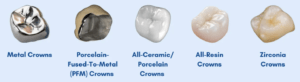
Clinics in Dubai may offer several crown materials. The right one depends on where the tooth sits, how strong you need it to be, and how natural you want it to look. The summaries below reflect common material differences described in guides such as types of crowns used in Dubai and this crown materials comparison.
| Material | Best for (front/back) | Aesthetics | Strength | Chip risk | Opposing tooth wear | Metal-free | Typical longevity | Typical Dubai price band |
|---|---|---|---|---|---|---|---|---|
| Porcelain (all-ceramic) | Front | High | Medium | Medium to high | Can be higher if rough | Yes | 5 to 15 years | Mid |
| Zirconia | Back and front | Medium to high | High | Low (monolithic) | Possible if not polished | Yes | 10 to 25 years | Premium |
| PFM (porcelain on metal) | Back | Medium | High | Medium | Lower to medium | No | Often 5 to 15 years | Budget to mid |
| Gold/metal alloy | Back | Low (visible metal) | High | Low | Low | No | 20 to 40+ years | Premium+ |
| E-Max (lithium disilicate) | Front (and some back) | High | Medium to high | Medium | Medium | Yes | Varies by bite | Premium |
| Composite resin | Short-term or budget | Low to medium | Low | Higher | Low | Yes | Shorter lifespan | Lowest |
Use this table to shortlist, then confirm details with your dentist before you pay for a dental crown Dubai treatment.
Porcelain crowns in Dubai, when they’re the best choice
A porcelain crown is an all-ceramic crown made to look like a real tooth. It is often chosen for front teeth because it can blend in well with natural enamel. In Dubai, many patients pick this option when their smile line shows a lot of teeth.
Porcelain is widely described as a top cosmetic choice for front teeth in guides like this overview of crown types. It can also mimic a natural tooth’s light effect, often called translucency, as explained in this crown guide.
Best uses for porcelain crowns
- Front teeth that show when you talk or smile
- Teeth with stains that do not improve with whitening
- Patients who want a metal-free option
Benefits and limits to know
- Natural look: strong shade-matching potential.
- Metal-free feel: often preferred by people avoiding metals, as noted in material comparisons.
- Chipping risk: porcelain can chip under heavy bite forces or grinding, as described in crown durability notes.
- Opposing tooth wear: if the surface is not polished well, porcelain can wear the tooth it bites against, mentioned in this materials comparison.
Typical lifespan is often discussed as about 5 to 15 years, depending on bite, hygiene, and grinding habits. If you opt for a porcelain crown in Dubai, ask how your bite will be checked to ensure the crown and the opposing tooth are protected.
Zirconia crowns in Dubai, strength, aesthetics, and monolithic vs layered
Zirconia is a very strong ceramic. It is popular in Dubai because it can work well on back teeth and, with modern versions, it can also look natural on front teeth. Many people choose it when they want metal-free strength.
Guides such as this crown materials overview describe zirconia as highly resistant to fracture, which matters for molars and strong bites. Modern zirconia can also be more translucent than older versions, noted in Dubai crown material updates.
When zirconia is a great fit
- Back molars are where chewing forces are highest
- People who grind their teeth (bruxism)
- Patients with metal sensitivity who still want strong support
Monolithic vs layered zirconia
- Monolithic zirconia: one solid piece, usually the strongest option. Often used for back teeth and grinders.
- Layered zirconia: zirconia core with a more cosmetic outer layer. It can look better for front teeth, but it may chip more than monolithic, as explained in this monolithic vs layered note.
A zirconia crown Dubai plan can last around 10 to 25 years in many cases, depending on bite, fit, and aftercare, as reported in longevity ranges for materials. It can cost more than porcelain, and it needs precise preparation and fitting, as discussed in technique considerations.
Other crown options you’ll see in Dubai (PFM, gold/metal, E‑Max, composite)
Not every quote will be for porcelain or zirconia. Dubai clinics often offer several crown types, and each can be reasonable in the right case. Understanding these options helps you avoid confusion when two clinics suggest different materials.
PFM (porcelain-fused-to-metal)
PFM crowns have a metal base with porcelain on top. They can be strong and often cost less than all-ceramic options. But the metal can show as a darker line near the gum over time, and the porcelain layer can chip, as described in PFM pros and cons.
Gold or metal alloy
Gold crowns have a long track record for durability and can last 20 to 40+ years, as noted in material longevity guidance. The trade-off is appearance, so they are usually for back molars.
E‑Max (lithium disilicate)
E‑Max is a premium ceramic known for strong aesthetics and good strength. It is often chosen when you want a front tooth to look very natural but still be strong, as explained in this E‑Max overview.
Composite resin
Composite crowns can be a budget or temporary solution. They tend to stain and wear faster than ceramics, so they usually suit short-term needs rather than long-term plans.
When comparing a dental crown Dubai quote, always confirm the exact material and why it was chosen for your tooth position.
Scenario-based recommendations (match your situation to the right crown)
It is easier to decide when you match the crown to your real-life situation. The recommendations below reflect common material strengths described across Dubai crown guides, like this overview and this cost and material guide.
| Your situation | Often a good match | What to ask your dentist |
|---|---|---|
| Front tooth, visible smile | Porcelain or E‑Max, layered zirconia as an option | How will you match shade and translucency to nearby teeth? |
| Heavy grinding (bruxism) | Monolithic zirconia or metal | Do I need a night guard, and is my bite being adjusted? |
| After a root canal | Zirconia or E‑Max | Is a build-up needed before the crown? |
| Limited tooth structure left | Monolithic zirconia | Will you need extra support like a core build-up? |
| Metal allergy or sensitivity | Porcelain, zirconia, or E‑Max | Is the plan fully metal-free, including any core parts? |
| Very fast timeline | CAD-CAM zirconia or E‑Max if available | Am I suitable for same-day, and what are the trade-offs? |
| Budget-focused | PFM (with compromises) | Will the tooth show a dark gumline later if gums recede? |
| Long-term investment | Zirconia or gold | What lifespan is realistic for my bite and habits? |
These scenarios can shorten your choice list. They also help you ask better questions when choosing between a porcelain crown Dubai option and a zirconia crown Dubai option in the same clinic.
Crown cost in Dubai, typical price ranges and what’s included
The cost of a crown in Dubai is not one fixed number. Prices change based on the material, the clinic, and how complex your tooth is. Some people also need extra treatment first, like a root canal or gum care, which increases the total.
Dubai pricing details and what is included are often explained in guides like this crown cost breakdown. Use ranges as a guide, not a promise.
Indicative Dubai ranges by material (AED)
- Composite resin: 800 to 1,200
- PFM: 1,200 to 2,000
- Porcelain: 1,500 to 2,500
- Zirconia: 2,000 to 3,500
- E‑Max: 2,000 to 3,500
- Gold/metal: 2,500 to 4,000+
What a quote may include
- Consultation and examination
- X-rays or a digital scan
- Tooth preparation
- A temporary crown
- Lab or CAD-CAM fabrication
- Cementation, bite checks, and adjustments
- Follow-up visit(s)
Always ask if the clinic bundles these items or charges separately. Two quotes can look different even when the final total is similar.
What drives the final price (and how to compare quotes fairly)
To compare prices fairly, you must compare like-for-like. One clinic might show a low crown fee but add separate charges later. Another clinic might include scanning, temporary crowns, and follow-ups in one number. The cost drivers below are discussed in Dubai crown pricing factors.
Main price drivers
- Material choice: zirconia and E‑Max are often priced higher than PFM or basic porcelain.
- Dentist expertise: complex cosmetic cases may cost more with advanced training.
- Technology: digital scanning and same-day CAD-CAM systems can raise costs.
- Case complexity: root canal needs, core build-up, or gum work can add fees.
- Lab quality: better lab work and certified processes can cost more.
Checklist to compare quotes
- Is the material clearly named (not just “ceramic”)?
- Is the temporary crown included?
- Are scans or X-rays included?
- How many adjustment visits are included?
- What cement is used?
- Is there a warranty, and what does it cover?
Red flags include very low prices with vague materials, hidden fees, or no written warranty. Warranty periods of about 1 to 3 years are commonly mentioned in Dubai warranty discussions. This matters whether you choose a porcelain crown Dubai option or a zirconia crown Dubai option.
Quality and safety checks in Dubai clinics (how to choose a provider confidently)
You do not need to be a dentist to check quality. You only need a short list of smart checks. A helpful reference for what to verify is this Dubai-focused guide to clinic standards.
Licensing and credentials
- Check the clinic and dentist are licensed by the Dubai Health Authority (DHA).
- If you are comparing Emirates, note that Abu Dhabi uses a different authority (HAAD/DOH).
- Ask about the dentist’s training, and whether a specialist is involved for complex cases.
Evidence of experience
- Ask to see before-and-after photos of similar tooth positions (front vs back).
- Ask if they screen for grinding and check your bite.
Lab, materials, and shade matching
- Ask where the crown is made, in-house or partner lab.
- Ask for material certificates and reputable brand details, including CE-marked or FDA-approved documentation where relevant.
- For front teeth, ask how shade is matched, digital tools can help improve accuracy.
Good infection control is also important. A clinic should explain sterilization clearly, including autoclave use and safe handling steps.
Common questions that affect buying decisions (pain, sensitivity, eating, repairs, lifespan)
These are the concerns that often stop people from booking. Clear answers help you decide with confidence when planning a dental crown Dubai treatment.
Will it hurt?
Local anesthesia is standard during crown preparation, so you should feel pressure, not pain. This is described in Dubai crown procedure guidance.
How long will sensitivity last?
Mild hot or cold sensitivity can happen after preparation or after the crown is cemented. It often improves over days to a few weeks. If pain gets worse or lasts longer, you may need a bite adjustment or further checks.
How long do crowns last?
- Porcelain often lasts about 5 to 15 years, per material lifespan ranges.
- Zirconia often lasts about 10 to 25 years, per the same source.
- Gold can last 20 to 40+ years, also noted in those ranges.
Eating rules
- With a temporary crown: avoid sticky or hard foods.
- After final cementation: many dentists suggest softer foods for 24 hours, then normal eating.
What if it chips or loosens?
Small chips may be smoothed. Bigger damage can need a replacement. A loose crown should be treated quickly because decay can start underneath. Aftercare, such as brushing and flossing, is important for every tooth crown, including zirconia crowns and porcelain crowns. A simple aftercare overview is included in this maintenance guidance.
Alternatives to crowns (to confirm a crown is the right investment)
A crown is not always the best answer. Sometimes a smaller or simpler option can work. Thinking about alternatives can help you feel sure you are not over-treating. Dubai-focused comparisons, including implants, are discussed in this alternatives overview.
Common alternatives and when they fit
- Veneers: best for front teeth cosmetic changes when the tooth is mostly healthy. Not ideal for deep cracks.
- Onlays or inlays: good for moderate damage. They save more natural tooth than a full crown.
- Bonding: quick fix for small chips or gaps. It stains and wears faster than crowns.
- Root canal plus restoration: saves an infected tooth. Many root canal teeth still need crowns later for protection.
- Extraction plus implant: used when a tooth cannot be saved. It costs more and takes longer, but it replaces the whole tooth structure.
Decision cues
- If the tooth is cracked deeply or has a very large filling, a crown is often the safer protection.
- If the problem is mainly cosmetic and the tooth is strong, a veneer may be enough.
- If there is little tooth left, talk about build-ups, posts, or implant options.
This check helps you confirm that a dental crown is the right investment for your case.
Summary decision framework (tie type + price + timeline together without CTAs)
Use this simple framework to choose a crown type and judge a quote. The structure matches decision guidance found in Dubai crown decision checklists.
Step 1: Pick your priority
- Aesthetics (most important for front teeth)
- Durability (most important for molars and grinders)
- Budget (what you can afford comfortably)
- Timeline (same-day vs 1 to 2 weeks)
Step 2: Match material to location
- Front teeth: porcelain or E‑Max, sometimes layered zirconia
- Back teeth: monolithic zirconia or gold, sometimes PFM for budget
Step 3: Apply filters
- Grinding: lean toward zirconia or metal, consider a night guard
- Metal sensitivity: choose porcelain, zirconia, or E‑Max
- Root canal tooth: choose stronger materials and check if a build-up is needed
Step 4: Compare quotes fairly
Confirm what is included, what is excluded, and the warranty. This keeps crown cost Dubai comparisons honest.
Quick if/then examples
- If it is a front tooth and looks matter most, then a porcelain crown Dubai option or E‑Max often fits best.
- If it is a back molar and you bite hard, then a zirconia crown Dubai option is often the safer long-term choice.
- If your budget is tight and it is a back tooth, then PFM may work, but accept the cosmetic trade-offs.
The key takeaway is simple. Porcelain usually wins on natural front-tooth beauty, but zirconia usually wins on strength and long life.
FAQ
Why and when do I need a crown?
A crown is a tooth-shaped cap that covers a damaged tooth and helps bring back its shape, size, strength, and appearance. This is a common treatment in Dubai for both function and looks. A crown can protect a weak tooth and help you chew comfortably again. It can also improve a tooth that looks very dark or uneven.
Common reasons a dentist may suggest a tooth crown Dubai treatment include a cracked or fractured tooth, a tooth weakened by a large filling, after a root canal, when the tooth is more brittle, severe discoloration or a misshapen tooth, and to support an implant crown or a bridge.
What is the typical crown treatment journey in Dubai?
Most crowns in Dubai are done in two visits, but some clinics also offer same-day crowns using CAD-CAM machines. A typical journey includes consultation and exam, imaging or digital scan, tooth preparation, temporary crown, fabrication (often about 7 to 14 days), final fitting, and follow-up.
How much does crown cost in Dubai, typical price ranges and what’s included?
Crown cost Dubai is not one fixed number. Prices change based on the material, the clinic, and how complex your tooth is. Some people also need extra treatment first, like a root canal or gum care, which increases the total.
Always ask if the clinic bundles consultation, scans or X-rays, tooth preparation, a temporary crown, lab or CAD-CAM fabrication, cementation and bite checks, and follow-up visits, or charges separately.
Will it hurt?
Local anesthesia is standard during crown preparation, so you should feel pressure, not pain.
How long do crowns last?
Porcelain often lasts about 5 to 15 years. Zirconia often lasts about 10 to 25 years. Gold can last 20 to 40+ years.
