Full Mouth Rehabilitation Dubai: A Clear Guide to Planning, Phases, Costs, and Choosing the Right Provider
Estimated reading time: 10 minutes
Key Takeaways
- Full mouth rehabilitation Dubai is a full plan that fixes many problems across your whole mouth, in the right order.
- Most good plans follow the same structure: diagnose, design, treat in phases, then maintain long term.
- A full-mouth quote should come after proper records and planning, not before.
- To compare plans fairly, ask what is included and review written phases, materials, and maintenance.
- Choose a provider based on planning quality, bite expertise, documentation, and clear long-term maintenance.
Table of Contents
- Opening: what “full mouth rehabilitation” means in Dubai (and who this guide is for)
- Terminology in Dubai: rehabilitation vs reconstruction vs restoration vs smile reconstruction
- Who typically needs it: common problems, candidate profiles, and Dubai-specific triggers
- What a “successful” result looks like: goals, outcomes, and success metrics
- The diagnostic and planning process a serious Dubai provider should complete before quoting
- Treatment building blocks: what procedures can be combined (and how decisions are made)
- Typical phased timeline in Dubai: what happens in each phase and why
- Materials, technology, and lab factors that influence longevity and aesthetics
- Benefits, risks, and trade-offs: realistic expectations for full-mouth cases
- Pricing and “value” in Dubai: how to compare treatment plans without focusing only on totals
- How to choose a provider in Dubai: evaluation checklist for full-mouth cases
- Consultation questions to confirm you’re getting a complete plan (and the right “type” of full-mouth treatment)
- Decision pathway summary: how to proceed thoughtfully (and when to seek a second opinion)
- FAQ
Full mouth rehabilitation Dubai is not one treatment. It is a full plan that fixes many problems across your whole mouth, in the right order. This matters when you have more than one issue, like worn teeth, missing teeth, gum disease, or a bite that no longer feels right.
This guide is for Dubai residents and expats who want a predictable result and do not want “one tooth at a time” fixes that fail later. You will learn how a proper plan is built, how to compare clinics, and what questions to ask before you agree to treatment.
Most good plans follow the same structure: diagnose, design, treat in phases, then maintain long term. This flow is widely described in full-mouth care information, including explanations of comprehensive planning and phased treatment on full mouth rehabilitation services, and guidance that full-mouth care is a customised plan for complex problems on full mouth rehabilitation resources.
This article is written by Dr. Maroof Beg, a specialist restorative dentist with experience in cosmetic and general dentistry in Dubai.
Opening: what “full mouth rehabilitation” means in Dubai (and who this guide is for)
Full mouth rehabilitation means building a coordinated plan for your whole mouth, not picking separate treatments without a bigger picture. It is usually recommended when problems are linked together, such as old crowns failing, teeth wearing down, and the bite changing. In these cases, fixing one tooth may not last if the bite and gum health are not stable.
Many Dubai providers describe it as a complete service that restores oral health, function, and confidence. You can see this “whole plan” framing in explanations of full mouth rehabilitation and in Dubai clinic descriptions of the same service on full mouth rehabilitation pages.
This guide is for people in Dubai who:
- Have multiple issues, not just one broken tooth.
- Want fewer surprises, with clear steps and timelines.
- Need efficient care because of work, travel, or a short stay.
A serious plan usually follows: diagnosis, design, phased treatment, and long-term maintenance. This phased flow is commonly outlined in Dubai service explanations like diagnosis to long-term maintenance and reinforced in other full-mouth planning descriptions such as phased full mouth rehabilitation.
Terminology in Dubai: rehabilitation vs reconstruction vs restoration vs smile reconstruction
In Dubai, clinics often use overlapping terms. You may see full mouth rehabilitation Dubai, full mouth reconstruction Dubai, full mouth restoration Dubai, and smile reconstruction Dubai used on different websites, even when the patient problem is similar. The real difference is usually the focus, not the size of the case.
A simple way to understand the language is this spectrum:
- Function: how you bite, chew, speak, and how comfortable your jaw feels.
- Structure: how strong and stable your teeth and restorations are.
- Aesthetics: how your smile looks, including shape and colour.
In practical terms:
- Rehabilitation or reconstruction often means function and structure first, like rebuilding worn teeth, stabilising the bite, and replacing missing teeth. This focus is described in full-mouth care explanations such as rehabilitation for severe wear and bite issues.
- Restoration often means repairing and strengthening teeth and gums, commonly with crowns, onlays, and gum treatment. This kind of restorative focus is reflected in descriptions like restorative full-mouth planning.
- Smile reconstruction is usually more aesthetics-heavy. It can include veneers, whitening, or gum shaping, and it works best when function is already stable, as noted in explanations of aesthetic elements within full-mouth rehabilitation.
How to use this in real life: ask the clinic what they are measuring, for example bite comfort, gum health, and how long the work should last, not just how white the teeth will look.
Who typically needs it: common problems, candidate profiles, and Dubai-specific triggers
People who need a full-mouth plan often have several problems happening at the same time. These are common signs that a whole-mouth approach may be needed, and they are listed in service descriptions such as who needs full mouth rehabilitation and in other full-mouth overviews like candidate triggers.
Common triggers include:
- Worn-down teeth from grinding.
- Broken teeth or repeated fractures.
- Large areas of decay across many teeth.
- Failing crowns or bridges.
- Missing teeth and drifting or tilting teeth.
- Gum disease and bleeding gums.
- Jaw discomfort, headaches, or bite pain.
- A bite that feels uneven.
- A smile that looks older or uneven.
These problems are connected. Missing teeth can cause shifting, which changes the bite. A changed bite can increase wear and fractures. Gum disease can make teeth less stable, which makes restorations harder to keep long term.
What a “successful” result looks like: goals, outcomes, and success metrics
A good full-mouth result is not only about looks. It should work well every day, and it should be easier to maintain.
Core goals usually include:
- Pain-free chewing and clear speech.
- A stable bite that feels even and comfortable.
- Healthier gums and control of disease.
- Restorations that are durable and can be repaired if needed.
- A natural-looking smile that fits your face.
It helps to separate two kinds of success:
- Clinical success: stability, comfort, gum health, and a clear maintenance plan. This “maintainability” is a key point in full-mouth planning discussions such as long-term stability in full-mouth cases.
- Cosmetic success: teeth that look lifelike and balanced, not just very white. This is where smile reconstruction Dubai elements can be part of the plan, but they should match the bite and gum health.
Longevity depends on your risks and your maintenance habits, including grinding, hygiene, and smoking. These factors should be discussed before treatment starts.
The diagnostic and planning process a serious Dubai provider should complete before quoting
A full-mouth quote should come after proper records and planning, not before. A thorough provider usually gathers detailed information first, including imaging and bite checks.
Diagnostics often include:
- A full clinical exam of teeth, old fillings, crowns, and gums.
- Photos of the face, smile, and inside the mouth.
- X-rays, and a CBCT scan when needed.
- Gum checks and periodontal charting.
- Bite analysis, including wear patterns and jaw comfort.
- Digital scans or impressions for accurate models.
Then comes the design phase. Many providers use a wax-up, mock-up, or temporary teeth so you can “test drive” the new bite and appearance before final work. This approach is described in explanations of provisionals and mock-ups in full-mouth planning.
Risk planning matters too. Disease control and unstable teeth usually come first, before full mouth reconstruction Dubai work begins. Good planning guidance highlights sequencing and risk control, as noted in full-mouth rehabilitation planning.
Treatment building blocks: what procedures can be combined (and how decisions are made)
Full-mouth plans combine different treatments based on what you need first. A provider should explain why each step is chosen, and what it is trying to protect. Full-mouth overviews show that stabilisation, bite work, replacement, and restorations can be combined, as described in treatment components and restorative planning summaries like restorations used in full-mouth cases.
Common building blocks include:
Stabilisation and disease control
- Removing decay and stopping infection.
- Gum treatment for inflammation and periodontal disease.
- Removing teeth that cannot be saved.
Bite correction and functional work
- Splints or night guards for grinding and jaw symptoms.
- Orthodontics or aligners when tooth position is driving the bite problem, as discussed in bite correction options.
- Small bite adjustments in select cases.
Replacing missing teeth
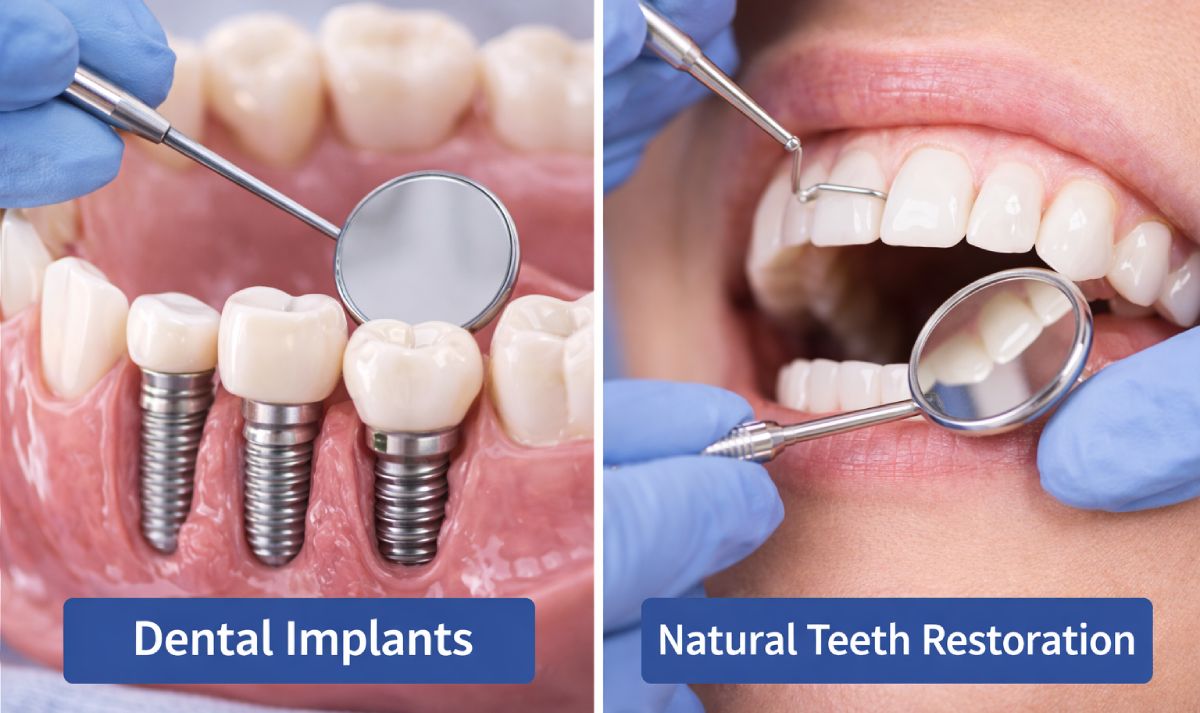
- Implants when bone and gum health support them, often chosen for durability.
- Bridges when a quicker fixed option fits and nearby teeth are suitable.
- Partial dentures as an interim or budget-friendly option, with extra cleaning needs.
Restoring damaged teeth and aesthetics
- Fillings or onlays for smaller damage.
- Crowns for stronger support.
- Veneers mainly for appearance, but only when the bite is stable.
- Smile reconstruction Dubai add-ons like whitening or gum contouring, described in aesthetic adjuncts in full-mouth care.
Key decision points often include bone and gum health, grinding risk, timeline, budget, and how many teeth are involved.
Typical phased timeline in Dubai: what happens in each phase and why
Timelines depend on complexity. Some cases take weeks, while others take months, especially when implants or orthodontics are needed. A phased approach and tailored timelines are commonly described in full-mouth planning resources like phases and duration.
Many plans follow five phases:
Phase 1: stabilise urgent issues
This is where pain, infection, gum disease, and hopeless teeth are handled first. Stabilisation is emphasised in phased care descriptions such as early stabilisation steps.
Phase 2: design and temporaries
Digital planning, mock-ups, and sometimes temporary teeth help test the bite and look before final work. This “test drive” approach is explained in planning with provisionals.
Phase 3: definitive reconstruction or restoration
This is where crowns, bridges, veneers, and implant restorations are completed in a planned order, like the sequence outlined in definitive full-mouth treatment.
Phase 4: refinement and protection
Final bite checks, comfort adjustments, and protective appliances like night guards can reduce damage risk, which is part of long-term planning described in protecting restorations.
Phase 5: maintenance
Regular reviews and hygiene visits are often recommended every 3 to 6 months, as noted in maintenance scheduling.
What can extend timelines:
- Implant or graft healing time.
- Time needed to stabilise gums.
- Orthodontic movement.
- Complex bite changes that need careful testing.
Materials, technology, and lab factors that influence longevity and aesthetics
Quality in a full-mouth case is not only the dentist’s skill. It is also the planning tools, materials, and lab work behind the scenes. Many full-mouth resources highlight the role of digital scans and CBCT, and how material choices affect strength and appearance, including digital workflow in full-mouth planning and material discussions like materials used in full-mouth rehabilitation.
Key quality signals include:
Digital planning and imaging
- Intraoral scans for accurate models.
- CBCT scans when implants or bone questions exist.
- Digital planning that links the bite, teeth, and implant positions.
Lab quality and communication
A strong lab helps match tooth shade, shape, and small details. Good clinician-lab communication helps the final smile look natural, not flat or bulky.
Material choices
- Implant systems are commonly titanium-based, chosen for strength and track record.
- Ceramics such as zirconia and porcelain can change the balance between strength and lifelike appearance.
Bite design as a longevity driver
Even great materials can chip if the bite is poorly planned. Bite expertise reduces fracture risk and improves comfort.
Well-planned cases can last many years, but results still depend on personal risks and maintenance, which should be discussed clearly.
Benefits, risks, and trade-offs: realistic expectations for full-mouth cases
The main benefit of a full-mouth plan is stability across the whole mouth, not just one area. Benefits often include better chewing, clearer speech, pain relief, and renewed confidence. These outcomes are commonly listed in full-mouth rehabilitation discussions such as benefits of full-mouth rehabilitation.
Benefits you can often expect:
- More comfortable chewing and speaking.
- Less pain from broken teeth or bite strain.
- A more even bite.
- A smile that looks balanced and natural.
Risks and complications also matter. Full-mouth resources discuss risks like implant failure, gum recession, chipping, and sensitivity. For example, implant failure risk is sometimes cited around 5 to 10 percent, alongside other complications, in risk information for full-mouth rehabilitation.
Possible risks include:
- Implant complications or failure.
- Gum recession over time.
- Chipping or fractures if bite forces are high.
- Temporary sensitivity.
- Short-term bite discomfort while adjusting to a new bite.
Trade-offs are real. Grinding, poor hygiene, and smoking can shorten the lifespan of restorations, and this maintenance responsibility is stressed in resources like long-term care for full-mouth cases.
Fast cosmetic-only fixes can look good at first, but they often fail if gum health and bite stability are ignored.
Pricing and “value” in Dubai: how to compare treatment plans without focusing only on totals
Full-mouth plans vary widely in cost because they vary in scope. Dubai providers often note that pricing depends on complexity, number of teeth involved, implants, grafting, materials, imaging, and whether specialists are needed. These cost drivers are reflected in service explanations such as what affects full-mouth rehabilitation cost.
Common cost drivers include:
- How many teeth need crowns, onlays, or other restorations.
- How many implants are needed, and whether bone grafting is required.
- Gum treatment and disease control needs.
- Type of lab and materials used.
- CBCT and advanced imaging.
- Sedation and appointment length.
- Whether multiple specialists are involved.
To compare plans fairly, ask what is included. Good comparison guidance recommends looking at written plans and inclusions, not just totals.
Compare apples-to-apples by checking:
- Are diagnostics included, such as CBCT, scans, and photos?
- Are temporary teeth included if needed?
- Which materials and implant systems are being used?
- How many adjustment visits are included?
- What is the repair or remake policy approach?
The cheapest plan can become expensive later if sequencing, bite planning, or lab quality is weak.
How to choose a provider in Dubai: evaluation checklist for full-mouth cases
Choosing the right clinic matters more in full-mouth cases because mistakes can affect many teeth at once. Dubai clinics often position full-mouth care as a coordinated service, which is a helpful standard to look for, as seen in comprehensive full-mouth rehabilitation care.
Use this checklist when comparing providers:
Team and skill mix
- Is there multi-specialty support, or a clear referral network for implants, gums, orthodontics, and complex restorative work?
Evidence and documentation
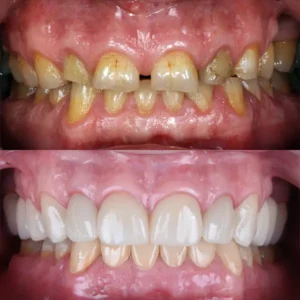
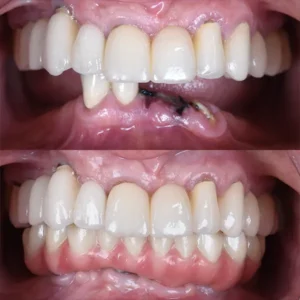
- Before and after cases that show function, not only whitening-style photos.
- Proof of planning, such as mock-ups or provisionals when needed, as described in planning and provisional examples.
Transparency and written planning
- A written phase-by-phase plan with reasons and options.
- Clear sequencing, timelines, and maintenance schedule, aligned with planning guidance like written planning and sequencing.
Safety and comfort standards
- Infection control and clear pain management options.
- Sedation availability when appropriate, as part of comfort standards discussed in patient comfort in full-mouth rehabilitation.
Red flags:
- Quoting before diagnostics.
- No discussion about bite and grinding.
- No maintenance plan after the final teeth are fitted.
- A cosmetic-only pitch when you have pain, gum disease, or a collapsing bite.
Consultation questions to confirm you’re getting a complete plan (and the right “type” of full-mouth treatment)
A good consultation should give you clarity. It should also help you compare one clinic to another using the same set of facts. Full-mouth service outlines often encourage structured discussions about records, sequencing, and follow-up, like the planning flow described in full mouth rehabilitation planning steps.
Use these questions:
Diagnostics and records
- What imaging is included, such as X-rays, CBCT, scans, photos, gum charting, and bite checks?
- Will I receive copies of my scans, photos, and proposed design?
Plan structure and phasing
- What are the phases, and what is the timeline for each phase?
- What happens if you find a problem mid-treatment?
- Do I need temporary teeth to test the bite, and why?
Alternatives and trade-offs
- What are my options for missing teeth, and why choose implants vs bridges vs dentures?
- If alignment is a problem, can orthodontics reduce how much drilling is needed?
Bite design and protection
- How will you design and confirm the bite is stable?
- Do I need a night guard, and how often are follow-ups?
Decision pathway summary: how to proceed thoughtfully (and when to seek a second opinion)
A smart way to proceed is to follow a simple decision path. First, confirm you truly need a whole-mouth plan because your problems are connected. Then make sure diagnostics and design are done before you accept a final quote. A phased approach is a common standard in full-mouth descriptions like full-mouth planning and sequencing and Dubai service overviews such as full mouth rehabilitation care steps.
Before committing, look for:
- Disease control first, then design and temporaries, then final work, then protection and maintenance.
- A written plan with a clear order and reasons.
- Proof of planning and bite checks, not guesses.
Seek a second opinion if:
- Two clinics give very different diagnoses.
- A provider suggests a rushed timeline without records.
- No one explains how the bite will be built and protected.
- There is no long-term maintenance strategy.
Request copies of your scans, photos, and the proposed phase breakdown. The core goal of full mouth rehabilitation Dubai is a stable, maintainable, natural-looking result guided by a complete plan, not a fast set of separate fixes.
FAQ
What is a full mouth rehabilitation Dubai?
Full mouth rehabilitation Dubai is not one treatment. It is a full plan that fixes many problems across your whole mouth, in the right order.
Who is this guide for?
This guide is for Dubai residents and expats who want a predictable result and do not want “one tooth at a time” fixes that fail later.
What structure do most good plans follow?
Most good plans follow the same structure: diagnose, design, treat in phases, then maintain long term.
When should a provider quote for full-mouth treatment?
A full-mouth quote should come after proper records and planning, not before.
How can I compare clinics and treatment plans in Dubai?
To compare plans fairly, ask what is included and review written plans and inclusions, not just totals.
What should I request before committing?
Request copies of your scans, photos, and the proposed phase breakdown.
Individual results may vary. This article is for general information and does not replace a personal consultation.